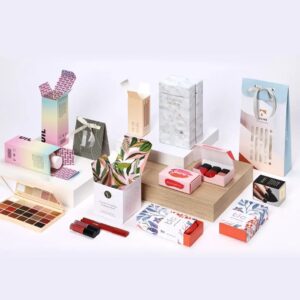
Metalized printing might sound technical, but you’ve already experienced its impact more times than you probably realize. That gold-foied perfume box catches light in the corner of a beauty store.
The holographic serum packaging shifts color when you tilt it. The chocolate brand with the mirror-finish lid that somehow makes a $12 product feel like a $40 one.
That’s metalized printing in packaging doing its job. Quietly. Effectively. On you, right now, whether you realize it or not.
This finish didn’t appear out of nowhere. It earned its place in modern packaging through a very specific set of circumstances — and understanding those circumstances tells you something genuinely useful about what customers respond to and why.
What Metalized Printing Actually Does to a Package
Let’s get the basics out of the way first, because “metalized printing” sounds more complicated than it is.
At its core, the process applies a thin metallic layer, usually aluminum, to a packaging surface. Sometimes, through vacuum metalizing. Sometimes through metalized films or foil stamping packaging. The result is a reflective, light-catching finish that immediately reads as premium.
It shows up in different ways.
Sometimes, metalized printing covers the entire box surface, while in other cases it is applied only to the logo, a border, a pattern, or even a single design element on a matte background. This selective application is exactly what foil stamping represents, and it is why it has become one of the most popular premium packaging finishes in the industry.
You’ve seen it everywhere. Cosmetics. Perfume. Premium food. Gift sets. Electronics. There’s a reason those categories lean on it so hard. It genuinely works, and it has for a while.
Packaging Got Boring. Then Everything Changed.
Go back about twenty years, and most retail packaging looked… fine. Printed cardboard, maybe a gloss laminate if the budget allowed, a logo, and some copy. Functional. Perfectly forgettable.
Nobody was particularly bothered by that. You bought something off a shelf, took it home, and used it. The box went in the bin within about forty seconds of arriving. That was normal.
Then two things happened. And they changed everything.
- E-commerce arrived.
When products began arriving at front doors instead of being picked off shelves, the unboxing moment became the entire physical brand experience. No shop atmosphere.
- No helpful staff. No display. Just a box. How that box looked and felt when it arrived was now the whole thing, the only chance the brand had to make an impression in the real world.
- Then came social media. Unboxing content specifically. Millions of people are filming themselves opening packages, sharing those moments, building whole audiences around product reveals.
And the packaging that kept showing up in those videos, the stuff that got shared, saved, recreated, wasn’t plain cardboard. It was packaged with texture. With finish. With something that caught light on camera.
Brands connected those dots fairly quickly. Good packaging wasn’t just a cost anymore. It became content, extended reach, and generated word of mouth — all without brands having to create or pay for it directly.
Metalized printing was sitting there ready for exactly that moment.
Two Seconds. That’s What You Get.
Here’s a hard truth about retail shelves: your packaging has roughly two seconds to do something before a customer moves on. Two seconds to register, to create a feeling, to make someone reach rather than walk past.
MMatte finishes communicate calm and considered. Gloss communicates energy. But metallic packaging design communicates something different. Something instinctive.
It says: “ This one is not the same as the one next to it.”
We are wired to associate reflective surfaces with value. It’s not marketing theory — it’s just how human perception works. Shiny things have always signaled something worth paying attention to.
Packaging designers figured this out and ran with it, and the data backed them up consistently.
Products with metallic finishes get handled more. They get picked up, turned over, and looked at properly. And getting picked up is the first step to getting bought.
The beauty industry worked this out before almost anyone else. If you track the evolution of cosmetics packaging over the last ten or twelve years, the shift toward foil-stamped logos, metallic laminates, and holographic elements tracks almost perfectly with the rise of beauty content on Instagram.
The packaging stopped being designed only for the shelf. It started being designed for the camera too.

The Moment Metallic Printing Became Accessible
For years, the real problem with metalized printing wasn’t that it didn’t work. It was that only certain brands could afford it. High minimums, expensive setups, and production processes that required serious volume to justify the cost.
Small brands wanted it. Mid-size brands wanted it. They just couldn’t get to it. Two things changed that.
Hot and cold foil stamping got refined to the point where selective metallic application became part of a standard print run rather than a separate, expensive process. You didn’t need to metalize an entire surface anymore.
- You could put a gold-foil logo on a kraft cardboard box and pay a fraction of what full metalizing used to cost. The result looked just as good — sometimes better, actually, because the contrast between a raw material and a metallic element can be striking in a way that full metalizing isn’t.
- Then, metalized films improved. Metalized BOPP laminate became widely available as a finish option, giving brands a full reflective surface at a cost that actually made sense for growing businesses. Folding cartons, flexible packaging, labels — all of them could now carry a metallic finish without a dramatic increase in production costs.
- Those two shifts together are why metallic packaging is now showing up on snack boxes, supplement tubs, subscription box inserts, and indie beauty brands that launched eighteen months ago. It stopped being a luxury finish for luxury budgets. It became a real option for brands at almost any scale.
Where Metallic Packaging Boxes Show Up and Why They Work
- Cosmetics and beauty will probably always lead here. Eye shadow palettes, foundation boxes, serum packaging — visual trust is the currency of beauty, and metallic finishes deliver it on sight.
- Our custom cosmetic boxes use foil stamping and metalized lamination regularly because the customers in that space expect it. It’s become part of what premium looks like in that category.
- Perfume and fragrance have always had a relationship with reflective surfaces. A foil stamped logo on a rigid perfume box isn’t really a design choice at this point — it’s practically a category convention.
- If the packaging doesn’t signal luxury on first glance, the price point becomes a harder sell. See how our custom perfume boxes handle this balance between restraint and richness.
- Specialty food brands have been quietly adopting metallic packaging faster than most people track. Coffee, chocolate, health snacks — brands in those spaces have discovered that a metallic finish lifts perceived value enough that customers will pay meaningfully more for a product that looks like it belongs in a premium category. The product inside might not have changed. The packaging changes everything around it.
- Rigid box packaging is probably where metalized printing has had the most visible cumulative impact. A magnetic closure rigid box with a foil-stamped logo and a soft touch coating is a genuinely different object from a plain printed box.
People do not throw those away. They keep them. Reuse them. Display them. Put things in them. Your brand lives in their home long after the product is gone. Our custom rigid boxes are built around exactly these combinations — finishes that work together and keep working. And if you’re exploring gift packaging specifically, our custom gift boxes follow the same logic.

The Sustainability Question — Worth Being Honest About
This is the part most packaging content skips over, so let’s not.
Fully metalized films have a recycling problem. Separating the metallic layer from the substrate requires processes that most standard recycling facilities simply don’t have. That’s
a real issue, and it’s fair for brands and customers to raise it.
But the industry has moved on to this more than most people realize.
Selective foil stamping packaging, using metallic finishes only on specific design elements rather than covering an entire surface, cuts the amount of metallic material used significantly while keeping most of the visual impact.
Water-based metallic inks have improved to the point where they deliver a credible sheen without the recycling complications of foil film. Metalized paper, as opposed to film, offers a more recyclable substrate for brands that need the look but want packaging that ends up in the right bin.
A fully solved problem it is not. But genuinely more options are available now to brands that care about both how their packaging looks and where it goes when the customer is done with it than were available a few years ago.
So, Why Does Any of This Matter for Your Brand?
Because if you’re still shipping product in plain printed cardboard while your competitors are using premium packaging finishes like foil-stamped logos and metallic laminates — your packaging is doing less work than it could be.
Not because flat print is wrong. It isn’t. But the visual bar across most product categories has moved, and what looked premium five years ago looks ordinary now. Customers have seen enough metalized printing in packaging that it has recalibrated what “good packaging” means to them.
Metalized printing earned its place in modern packaging because it answered something customers were already responding to. Shine signals value. Texture creates a moment. Reflective surfaces photograph well, get shared, and get kept.
That’s a lot for a finish to carry. And the fact that it’s now genuinely accessible at almost any scale means there’s very little reason to leave it on the table.
Frequently Asked Questions About Metalized Printing
What is metalized printing and how is it different from regular printing?
Regular printing simply puts ink on a surface. In contrast, metalized printing goes a step further — it applies a thin metallic layer, usually aluminum, either through foil stamping, vacuum metalizing, or metalized film lamination. As a result, you get that reflective, light-catching finish often seen on premium cosmetics, perfume boxes, and luxury gift packaging.
While standard printing can look great, metalized printing tends to look more luxurious and expensive.
Is metalized printing only for luxury brands?
It used to be, honestly. High setup costs and large minimum orders kept it out of reach for smaller brands. However, that has changed significantly. Hot and cold foil stamping, improved metalized films, and better production technology have brought costs down, making it accessible to growing brands and even startups without requiring enterprise-level budgets.
Which packaging types work best with metalized finishes?
Metalized finishes work on a wide variety of packaging, including:
- Rigid boxes – Great for high-end products like cosmetics or electronics.
- Folding cartons – Ideal for product lines that need an elegant, polished look.
- Mailer boxes – Adds a premium touch to subscription or e-commerce packaging.
- Labels – Can highlight logos or key product information with metallic accents.
Tips for Maximum Impact
For instance, the biggest visual impact often comes from combining a matte base with selective foil stamping, allowing the metallic element to stand out rather than blend into an already-shiny surface.
Can I use just a foil-stamped logo instead of metalizing the entire box?
Yes — and in fact, selective foil stamping is often the better choice. A gold or silver foil logo on a matte black or kraft box creates a striking contrast that reads as more premium than a fully metalized surface.
Additionally, selective stamping offers two key benefits:
- Lower cost – Uses significantly less metallic material.
- Sustainability – Less material is better if eco-friendliness is part of your brand positioning.
Is metalized packaging recyclable?
Recyclability depends on the type of metalized finish:
- Fully metalized films – Difficult to recycle; separating the metallic layer from the substrate is challenging for most facilities.
- Selective foil stamping – Uses less metallic material and is less problematic.
- Metalized paper – More recyclable than metalized film.
- Water-based metallic inks – Offer the most eco-friendly metallic effect.
Therefore, if recyclability is important to your brand, it’s worth discussing the options with your packaging supplier before committing to a finish.
Ready to Upgrade Your Packaging With Metallic Finishes?
Your packaging is either working for your brand or it isn’t. In fact, there’s no middle ground, especially in categories where customers make decisions in seconds and share what catches their eye.
If you want to explore what metalized printing can do for your product — whether it’s a foil-stamped logo on a folding carton, a full metalized laminate on a rigid box, or selective spot finishes on mailer boxes — get in touch with the team at Custom Box Master today